Select your language

Italian National Agency for New Technologies, Energy and Sustainable Economic Development

ENEA Atlas for development cooperation

Bio-aerated autoclaved concrete for sustainable building

For achieving the objectives:
obiettivo 9
obiettivo 11

Description

ENEA makes available its know-how on an innovative technology to develop cellular concrete, a product particularly suitable to be used in developing countries thanks to its good thermal insulation properties. This technology exploits the reaction between the enzymes contained in microorganisms (yeasts) and hydrogen peroxide to generate the aeration process needed to produce cellular concrete.
Benefits and Advantages:

  • Highly environmentally-friendly
  • Simpler and better industrial fabrication process
  • Enhanced technical properties of the product
  • Cost saving


ENEA Service:

  • Consulting on the possible product applications
  • Design

ENEA Activities:

  • International ENEA patent (WO2019049005) “Process for preparing bioaerated autoclaved cement” named BAAC.
  • The current research activity is aimed at technological development to enhance the production processes and the final product
  • POC ENEA 2018-19. High energy performance bio-aerated cellular concrete, BIO-CEM.
  • ENEA-EKORU srl Research cooperation agreement
  • ENEA- FCS Tecnology LLC Research cooperation agreement

Sectors

231 - Energy Policy
23183 - Energy conservation and demand-side efficiency

SDGs Target

11.6 Reduce the adverse per capita environmental impact of cities, including by paying special attention to air quality and municipal and other waste management
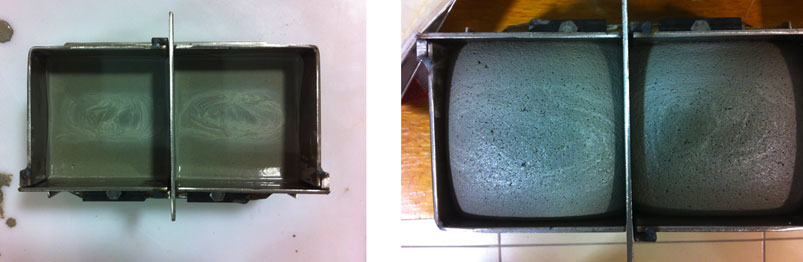
Aeration process; before (left) and after (right) the leavening
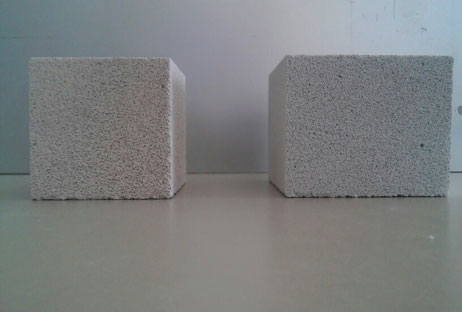
BAAC sample (left) versus CAA sample (right)
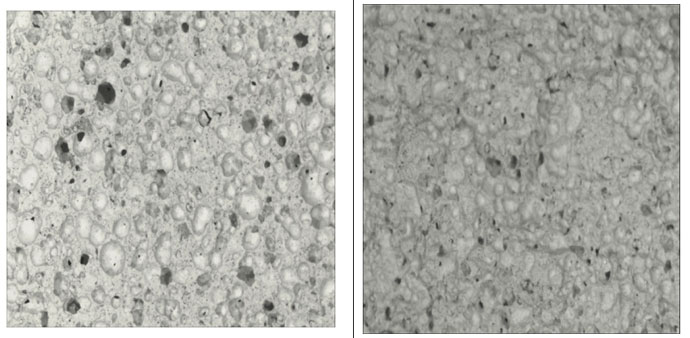
Porosity of commercial AAC (right) and experimental BAAC (left) samples, observed with 10x magnitude optical microscope

Refecences

Energy Technologies and Renewable Sources Department, Department for Sustainability

Contacts

Published: 7/05/2019
Feedback